Director’s Cut: 1. Why is the leadership conversation a dead end?
Director’s Cut is a no-fluff blog series. Mika Tarhala, Arter’s Managing Director, shares the reality of leadership. What he’s learned the hard way, where he’s succeeded, and why structures are everything.
I’m starting this series because I got tired of reading texts about leadership where people get blamed instead of structures. The micromanager. The toxic boss. Name-calling has one problem: it doesn’t fix anything.
The same person behaves differently in different structures
The same person behaves differently in different structures. I’ve seen this dozens of times across different industries.
The micromanager stops micromanaging when responsibilities and incentives are clear. A toxic team transforms within a month when listening is built into the structure. Behaviour we tend to label as “bad” appears, oddly enough, more often in organisations where disagreement is suppressed than in ones where it’s discussed openly in everyday work.
It’s easier to blame individuals than to fix the structure. That’s why situations rarely change.
Where my observations come from
I’ve read the same leadership books as everyone else. Applied the same models. The turning point in my approach came when I stopped looking for a model and started looking at people beneath the structures.
What motivates whom? Where do incentives push behaviour? Who benefits from the current situation, and who suffers from it?
Chaos usually isn’t chaos. It’s motivations that haven’t been seen.
The answers weren’t in the books. They became visible only when I stopped and looked at people — and at the things that actually influence them.
What Director’s Cut does differently
Director’s Cut is a series of opinion pieces. I’ll share what’s been tried in different situations, where things have failed, and what I’ve learned afterwards.
The series ties to a single sentence that captures how I approach leadership — and how I’m building Arter’s future:
Structure enables clarity, clarity builds trust, and trust drives growth.
This is the thesis of Director’s Cut. Every blog in the series will lean on some part of this chain, even as the topics range from recruitment to eNPS metrics, from AI to profitability.
No generic fluff
I’m not promising universal truths. The examples come from different industries and different situations: building a SaaS business from scratch, two years of working from Mexico, and my current work at a software company of about 40 people.
I’ve built from scratch. I’ve grown organisations. And I’ve joined a company where some things had to be reorganised. What works in one situation doesn’t necessarily work in yours.
I’m also not promising that the series will be a pleasant read every week. Opinionated writing rarely is. The aim isn’t to offend — but if a claim feels unfair, that’s often a sign that the thesis resonates with something important to you.
What will I write about?
Upcoming Director’s Cut blogs will cover topics like these:
- Recruitment: vision before analysing skill
- The strategy meeting that actually leads to something
- AI doesn’t solve leadership problems. It reveals them.
- Profitability is born from value
- Calm execution: good leadership doesn’t look dramatic
- Freedom without responsibility is chaos. Responsibility without freedom is suppression.
- Two years from Mexico revealed which parts of leadership were structure — and which were habit
- 15 years of judo taught me that balance is a continuous correction
- The Finnish engineering student community taught me that commitment can’t be forced — but it can be earned
A mix of business, personal experiences, lessons learned, and observations from the surrounding environment.
But all of them share the same logic: structures matter, and structures exist for the people inside them.
Who is this blog series for?
I’m writing primarily for you — someone who leads an organisation or a team, and who recognises the situation where words and structures don’t match.
The strategy is impressive. Everyday execution tells another story. The values are written out, but no one remembers them on a Wednesday afternoon. Targets get set, but execution always falls short.
You recognise the situation — because almost every leader I’ve spoken with has described the same thing.
The purpose of Director’s Cut is to offer insight into why this happens — and examples of what you can do about it. No five steps. No seven principles.
One thesis at a time, argued and grounded in real experience.
About the writer: 5 quick questions
Who are you?
I’m Mika Tarhala, M.Sc. in Real Estate Management from Aalto University. My career has been in software and consulting, lately around building and renewing businesses. In my free time I hunt, hit the gym, play golf, and I’m passionate about cooking.
How did you end up in leadership?
I’ve always drifted into leadership in a group rather than chasing it. Listening, giving others space, and creating opportunities for success feel like a natural way of working — which is probably why the team has usually chosen me for the role in the end. I see myself as an enabler in the background. The team succeeds, and I succeed through them.
How would you define leadership in one sentence?
Leadership is building structures — and ultimately taking responsibility for ensuring others can do their best.
What’s the most instructive thing about leadership?
That the same things repeat across organisations in different forms. There’s rarely a universal rule, but you learn to recognise the patterns.
Where should Finnish companies be more ambitious?
In growth, in renewal, and in challenging their own way of doing things. A culture of “doing well enough” is a decent foundation, but it too often turns into caution. Doing well and being excellent are not the same thing.
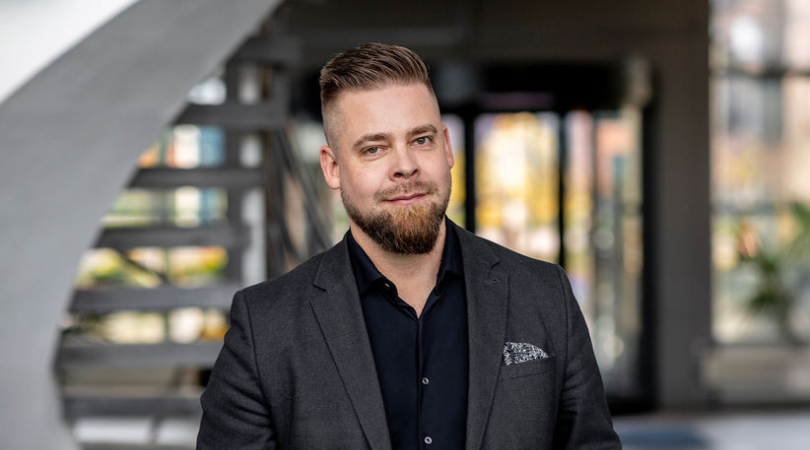
Author of the Director’s Cut blog series: Mika Tarhala
Mika Tarhala is Managing Director at Arter Oy. With over 15 years of experience in the software and consulting industries, he has built a SaaS business from scratch to market leadership, leading it from Finland, with a distributed team, and for two years from Mexico. Today, he is building Arter as part of the European TSS group.
Mika’s leadership philosophy is captured in a single sentence:
Structure enables clarity, clarity builds trust, and trust drives growth.