Director’s Cut: 3. Leader, the old thinking you need to let go is your own
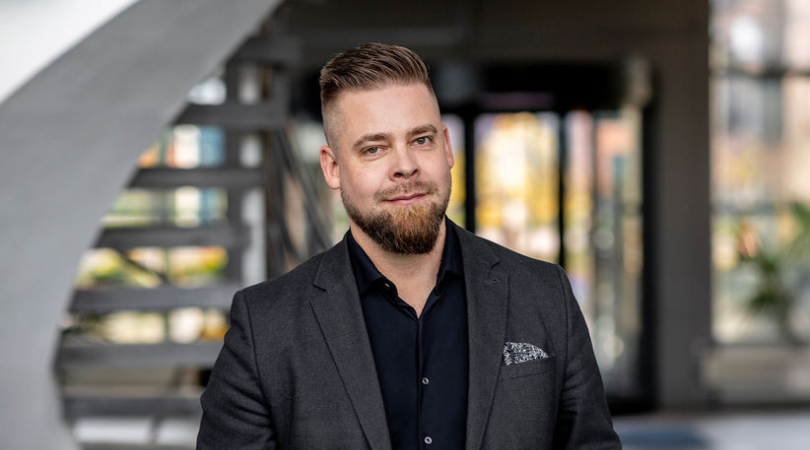
Director’s Cut is a no-fluff blog series. Mika Tarhala, Arter’s Managing Director, shares the reality of leadership. What he’s learned the hard way, where he’s succeeded, and why structures are everything.
When you hear the call to let go of old thinking, you probably picture someone else’s outdated mindset. Old processes. Old middle management. Or old customers who don’t understand.
The very first thing you need to let go of is the idea that old thinking is being kept alive by anyone other than you.
The oldest thinking in your organisation usually sits in the head of the leader who built the current structures. A leader who has grown used to a certain way of making decisions sees it as the natural way and doesn’t see anything wrong with it.
Holding on to old operating models doesn’t create change. Growth and renewal can’t be outsourced to others. They have to start with you.
Story 1: Lessons from a consulting firm — structures can’t rest on one person
Years ago, I worked at a consulting firm where the software was sold to the customer and then customised to the customer’s wishes.
Every project produced its own peculiarities. Every customer got exactly the solution they had demanded. In the short term, this looked like good customer service. In the longer term, it turned into unmanageable chaos.
The mess wasn’t caused by bad people. It was caused by metrics that rewarded short-term billing and forgot about scalability.
Old thinking believes: “The customer is always right, so let’s do whatever the customer asks.”
New thinking focuses on: “The customer wants a solution to their problem, so let’s understand the problem more deeply and build a solution that scales.”
We created a new strategy and stuck to it. We cleared the obstacles. We listened to customers more than before — but differently, looking for shared value instead of individual demands.
My first four hires were entirely different from the firm’s traditions. I justified them and pushed them through. The new hires saw the vision and developed it further in their own ways. Those four people became the cornerstones of the early success.
Challenging the old way wasn’t easy.
The biggest challenge wasn’t inside the unit or with customers. It was in the structures outside my unit — structures whose logic still pulled in the old direction. I acted as a shield between the unit and those structures, so that my team had the space to do something new. I also had to challenge myself, because I had grown used to the old way of doing things.
When I left for new challenges, the business and ways of working I had built didn’t hold up as well as I had hoped. When I walked out, the shield moved aside, and the new thinking wasn’t strong enough to stand alongside the old structures.
🎿 The lesson of the story:
Challenging one leader isn’t enough if the whole surrounding structure pulls in the other direction. You can’t just let go of the old. You have to build something in its place that sustains itself even after you leave.
Story 2: Physical presence is a lazy excuse for the remote work challenges you face
Another piece of old thinking I’ve had to challenge is the belief that good leadership requires physical presence.
I built a distributed business during the pandemic, led it from Finland, and continued leading it from Mexico for two years. The results speak for themselves.
Remote leadership isn’t remote leadership. It’s just leadership. With good structures, it works the same way as being on-site.
Old thinking believes: “You have to be in the same room.”
New thinking believes: “You have to see the same direction.”
This is a position I still have to defend almost every month in conversations with other leaders. I understand why. In old thinking, presence is the measure of trust. In new thinking, the measure of trust is clarity: who does what, when, and under what conditions.
🎿 The lesson of the story:
Remote work isn’t a location problem. If it doesn’t work, it’s a leadership problem.
Story 3: AI isn’t a technology question
The third piece of old thinking I’ve wrestled with is AI.
At this point, many leaders assume I’m referring to someone else’s old thinking for example, “the old employees don’t dare to use AI.” I’m not. I mean my own old thinking.
Old thinking believes: “AI adoption is a technology question.”
New thinking believes: “AI is a culture question.”
Old thinking believes: “Let’s calculate where AI will produce savings.”
New thinking believes: “Let’s understand what the team fears — and what motivates one person to experiment and another to hold back.”
🎿 The lesson of the story:
AI adoption doesn’t fail on technology. It fails when leadership doesn’t recognise its own fear and its own old thinking. The skis don’t point in the same direction if the leader is skiing the wrong way.
Story 4: My journey at Arter started with listening
When I started in the Director of Business role at Arter three years ago, the biggest temptation would have been to do things the new way right away. The company had been running for nearly thirty years. It would have been easy to say: “This is the old way. Let’s change it.”
I did the opposite. I listened first.
At Arter, many things were already being done extremely well — built on long experience. The company also did things whose origins no one could remember anymore, and which had over time become useless or even obstacles. The difference wasn’t always obvious.
Old thinking would have believed: “I’m the new leader, so I decide what stays and what goes.”
I decided instead to go with thinking that believed: “I’m the new leader, so I have a chance to listen more carefully than anyone else who’s been in the company for years.”
We adjusted structures to improve clarity. We strengthened strengths instead of trying to rebuild everything from scratch. Easing customers’ everyday work in a changing environment is still the red thread that runs through Arter, and we decided to sharpen the way it’s executed.
🎿 The lesson of the story:
Among these decisions have been ones where I’ve had to challenge my own preconceptions about how things should be done. Note to self: don’t try to delegate even the changing of your own preconceptions. That thinking work also has to start with you.
Leader, you have to dare let go of the old thinking
Four different situations, four different eras. The same pattern repeats:
The old thinking that needs to be challenged isn’t sitting on the other side of the organisation. It’s sitting in the leader’s head.
Companies don’t fall to old systems, old customers, or old products. They fall to old thinking that sits in the heads of their leaders — and to the fact that no one dares to recognise it.
The thesis of Director’s Cut is: structures enable clarity, clarity builds trust, and trust drives growth. But before all of these, there’s one step you can’t skip: the leader has to let go of their own old thinking before the organisation can let go of its own.
Skis pointing in the same direction — not each one going its own way. 🎿
Author of the Director’s Cut blog series: Mika Tarhala
Mika Tarhala is Managing Director at Arter Oy. With over 15 years of experience in the software and consulting industries, he has built a SaaS business from scratch to market leadership, leading it from Finland, with a distributed team, and for two years from Mexico. Today, he is building Arter as part of the European TSS group.
Mika’s leadership philosophy is captured in a single sentence:
Structure enables clarity, clarity builds trust, and trust drives growth.